
Most people hiring a hydro excavation crew for the first time aren’t sure what they’re actually buying. You know you need some careful digging near utilities. You know a backhoe isn’t the right tool. Past that, it can feel like a lot of trust placed in a company you found online an hour ago.
So here’s what a professional job actually looks like, from the first call to the final cleanup.
What hydro excavation actually is
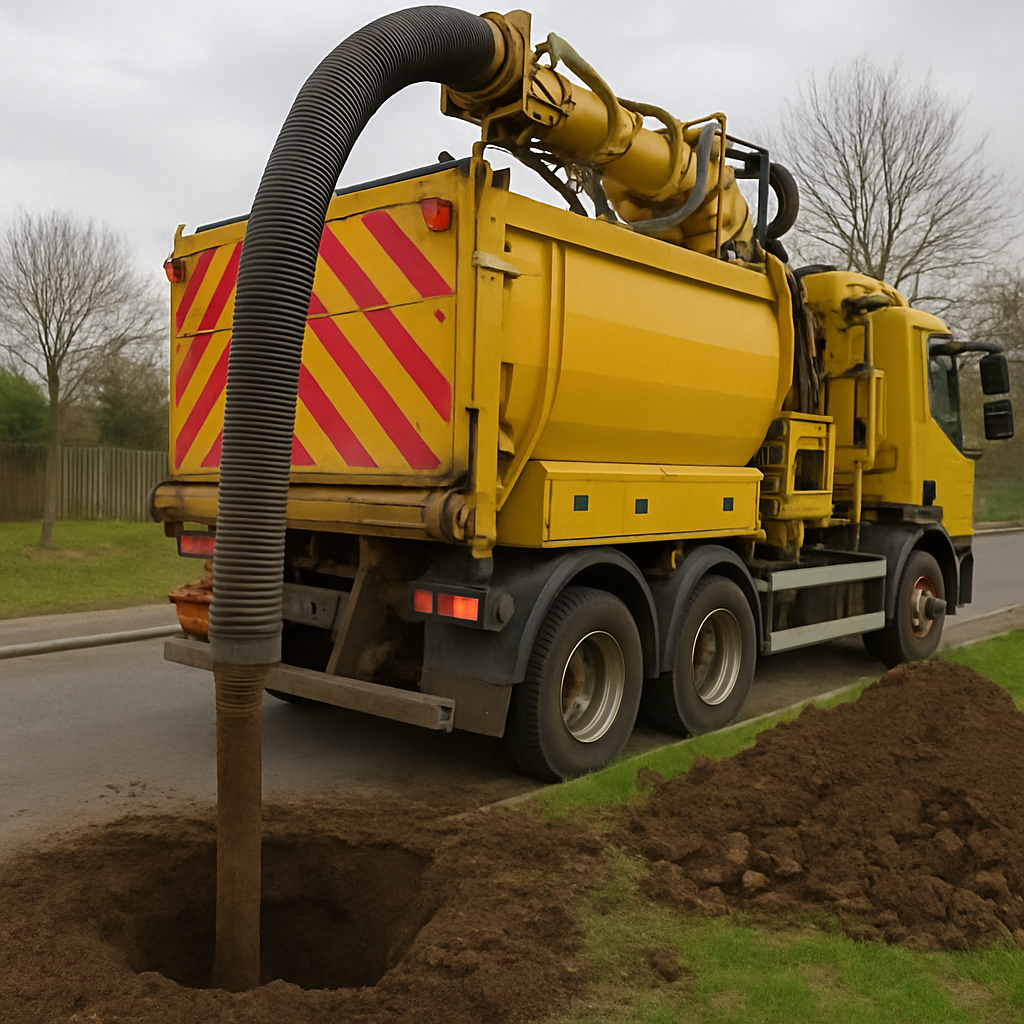
Quick version: pressurized water breaks up the soil, a vacuum pulls the slurry into a tank on the truck. No metal teeth swinging blind through the ground. No guessing where a pipe might be.
That’s why people use it near utilities. Water can cut through dirt an inch away from a gas line without touching it — provided the operator knows what they’re doing. The truck matters, but the person running the wand matters more.
The first conversation
A contractor worth hiring will ask questions before they quote anything. If you describe the job and get a firm price in under a minute, slow down.
What they should want to know: what you’re trying to reach, how deep, how many holes or how much trench, what the ground is like, where the truck can actually park, how far that is from the work area, and whether anything nearby is sensitive — traffic, buildings, landscaping.
For bigger jobs, some will ask to come out and look. That’s a good sign. It means they’re thinking about your specific site, not just slotting you into a schedule.
Utility locating — this matters a lot
Before a shovel or a wand goes in the ground, utilities need to be located and marked. In the U.S., that starts with an 811 call, which gets the public lines flagged. Whether you make that call or the contractor handles it, make sure it’s sorted before work starts.
Worth knowing: 811 only covers public utilities up to the meter. Anything private — a line from your building to a secondary structure, old irrigation, private electrical — often isn’t in the system at all. A good contractor will raise this and may recommend a private locating company for anything that seems unclear.
On site, a professional crew runs through a proper safety plan. You don’t need to read it cover to cover, but you should see cones or barriers if they’re near traffic, and if you ask how they handle digging near a marked gas line, they should give you a straight answer without looking uncomfortable.
Not all trucks are the same
Hydro vac units come in various sizes, and the right one depends on the job. Bigger trucks hold more slurry, so they go longer before needing to dump. But they don’t fit everywhere — tight sites, narrow access, residential driveways.
A few other things that often come up:
- Hose reach. If the truck has to sit 100+ feet from the work, they need enough hose to bridge the gap.
- Heated water. For frozen ground, some units heat the water. Not all of them do.
- Water source. Bigger jobs may need the truck to refill mid-day. Ask where that comes from and whether it affects your timeline.
You shouldn’t need to pick the truck yourself. The contractor should tell you what they’re sending and why.
The crew
Someone is standing there holding a high-pressure wand, cutting through soil inches from a line that, if hit, could take out power to a street or worse. The experience of that person matters.
It’s reasonable to ask how long they’ve been doing this, whether they’ve worked in your type of soil before, and what their process looks like near marked utilities. Seasoned operators work deliberately. They ease off pressure near flagged lines, check depths regularly, and speak up when something doesn’t look right. That careful pace is what you’re paying for.
Permits and disposal
Some jobs need permits — anything in a public right-of-way, near traffic, on municipal property. Whether you’re responsible for those or the contractor handles them should be discussed upfront.
Disposal is easy to forget about. The slurry coming off the truck can’t just be dumped anywhere. It has to go to an approved facility, and depending on what’s in it, disposal can add real cost. Get clarity on that before you agree to anything.
If there are other trades on site, ask whether the contractor is willing to coordinate timing. Someone standing around billing hourly while they wait on a different crew is a problem for your budget.
Communication
You should have one direct contact and a phone number that gets answered. That’s not a lot to ask.
On a short job, that might just mean a call when the crew’s on the way and a summary when they’re done. On anything multi-day, you want some kind of daily update. Something like: we got through four of the six locations today, hit an unmarked conduit at about two feet on the third one, back tomorrow morning.
Things happen underground. Pipes aren’t where the drawings say. Old infrastructure turns up unexpectedly. None of that is necessarily a crisis — but you want to hear about it the same day, not when you see the invoice.
Site protection
Hydro excavation is cleaner than traditional digging. It still involves a big truck, a high-pressure hose, a vacuum, and a fair amount of wet soil.
A careful crew will put mats down on soft ground or lawns, keep mud off paved areas, and not park somewhere that’ll crack thin concrete. If there’s anything on your site you’re especially concerned about — a recently finished driveway, a landscaped area, a building facade — say so before work starts. It’s a much easier conversation before something gets sprayed than after.
How long it takes
Honest answer: it depends. Soil type makes an enormous difference. Sandy soil moves fast. Packed clay or rocky fill doesn’t. Frozen ground needs hot water and more time. Every trip to the disposal site is time off the job.
Ask for a realistic estimate and ask what might push it out. A few test holes in good conditions might be half a day. A long trench through difficult ground near a busy road could stretch across multiple days. The more specific information you give them, the better estimate you’ll get.
How pricing works
Most contractors charge by the hour with a minimum, though some quote per hole or by the day. What varies more is what’s included.
Things that sometimes appear as extras: mobilization or travel to site, disposal fees, standby time while the crew waits on something, backfill, surface restoration. A lower hourly rate with a lot of add-ons can end up costing more than a higher rate that covers everything.
Ask exactly what’s in the quote and get it in writing. Not because contractors are dishonest, but because assumptions create disputes.
What happens to the holes
This one trips people up. Once the digging’s done, are the holes backfilled? Is that included or extra? Is cutting and repairing asphalt or concrete part of the scope?
Some crews backfill as standard. Some leave open excavations for another trade to work in, then fill them after. Some don’t do restoration at all. It varies. Sort this out before work starts so there are no surprises when you see the site at the end of day one.
At minimum, open excavations should be covered or fenced off when the crew leaves. Nobody should be tripping over anything.
Records
On commercial jobs especially, documentation matters. Photos of each exposed utility, depth notes, GPS locations, marked-up drawings, disposal receipts — these records can save significant headaches when the design or construction phase comes around later.
Ask what they typically provide. If your project has specific documentation requirements, tell them early rather than chasing records after the job is done.
Things worth watching out for
No real quote. “We’ll figure it out on site” isn’t good enough. You should know the rate, a rough time estimate, and what might add cost.
Hard to reach before you’ve hired them. If calls and emails go quiet during the sales stage, it’ll be worse once they’re busy on your job.
Dismissive about utility locating. If they seem impatient when you bring it up, or they shrug off private utilities, that’s a problem.
No insurance. Ask, and ask to see it. Digging near buried utilities carries real risk, and you don’t want to absorb it.
Price way below everyone else’s. Sometimes that’s a lean operation. More often, something got left out of the quote.
How to feel good about your choice
You don’t need to understand hydro excavation inside out to hire the right people. You need to ask a few straightforward questions and notice how they’re answered.
The contractors that do good work tend to ask more questions than you expect before quoting. They’re upfront about utility locating. They explain their pricing without getting vague. They contact you when something unexpected happens underground. They leave the site in order.
If a conversation gives you that sense — clear, direct, no brushed-off questions — you’re probably talking to the right crew. If something feels off, it usually is. Get another quote.